
1. The Science of Guilds: Beyond Folklore
Companion planting is often treated as whimsical folklore, but modern ecological science reveals real, measurable biological mechanisms at play:
- Biochemical Masking: Pungent terpenes released by alliums and herbs mask the scent trails of host crops, confusing pests.
- Root Exudate Nematocides: French Marigolds (Tagetes patula) exude alpha-terthienyl into the surrounding rhizosphere, effectively suppressing parasitic root-knot nematodes.
- Trap Cropping: Sacrificial plants like nasturtiums draw black aphids away from precious cabbages and squash.
- Rhizobial Nitrogen Fixation: Legumes form mutualistic relationships with Rhizobium bacteria, converting atmospheric nitrogen into bioavailable ammonium for surrounding heavy-feeding crops.
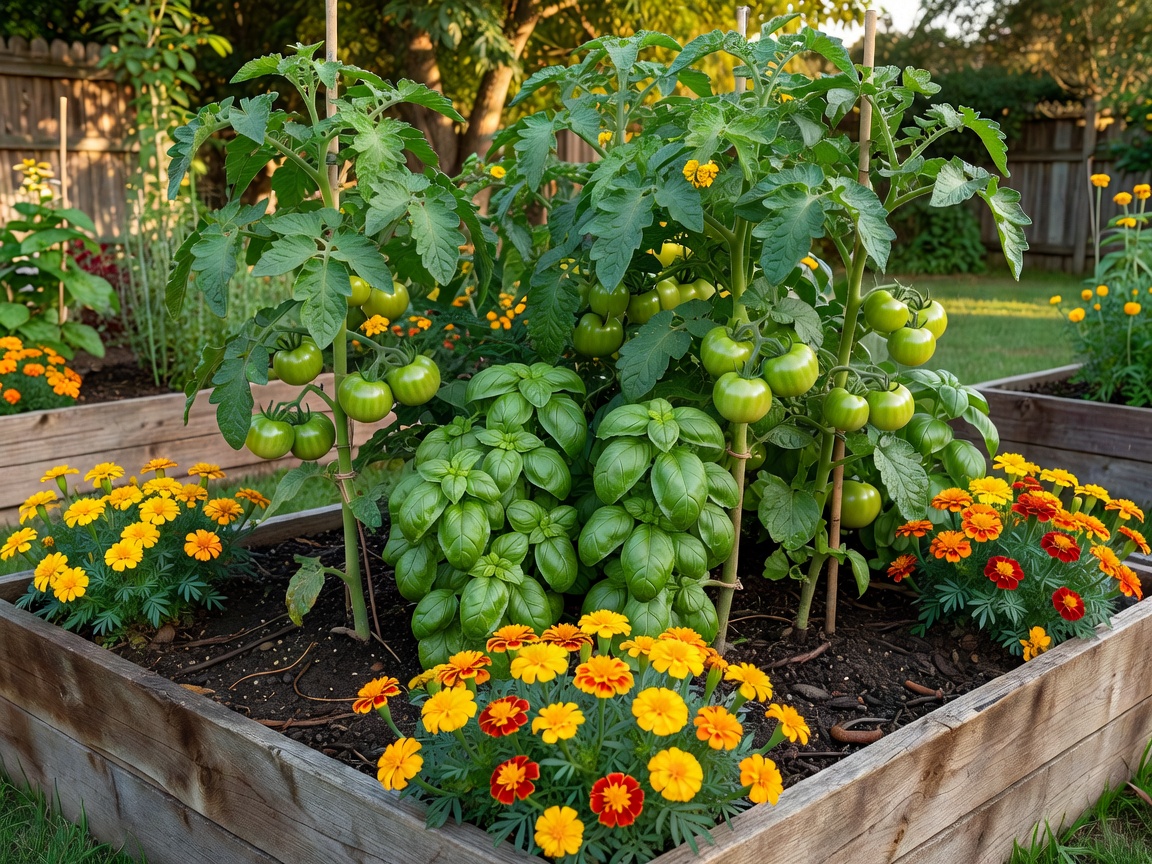
The Classic Trio: Tomatoes, Basil & French Marigolds
Planting basil at the base of indeterminate tomatoes creates a dense groundcover that suppresses moisture evaporation and weeds. Basil’s strong aroma helps deter hornworms, while vibrant marigolds line bed borders to attract hoverflies and predatory wasps.
2. The Ancient "Three Sisters" Poly-culture Guild
Originating with Indigenous agriculturalists throughout the Americas, the "Three Sisters" guild is an enduring triumph of sustainable agronomy:
- Corn (Zea mays): Grows upward to form a sturdy, living trellis for climbing legumes.
- Pole Beans (Phaseolus vulgaris): Climb the stalks while fixing nitrogen into the soil through root nodules.
- Winter Squash (Cucurbita pepo): Sprawls across the bed, creating a living mulch that shades soil, locks in moisture, and deters herbivores with prickly stems.
3. Detrimental Pairings to Avoid
Just as some plant combinations thrive, others inhibit each other's growth through allelopathy:
- Fennel with Almost Everything: Fennel exudes anethole, stunting growth in nearby tomatoes, bush beans, and brassicas. Always grow fennel in isolated perimeter containers.
- Onions & Legumes: Sulfur compounds produced by alliums hinder nitrogen-fixing bacteria on pea and bean roots.
Organic Agriculture Extension Resources
Explore verified research papers on polyculture: